Africa’s Emerging Cannabis Markets: Law, Opportunity, and Challenge
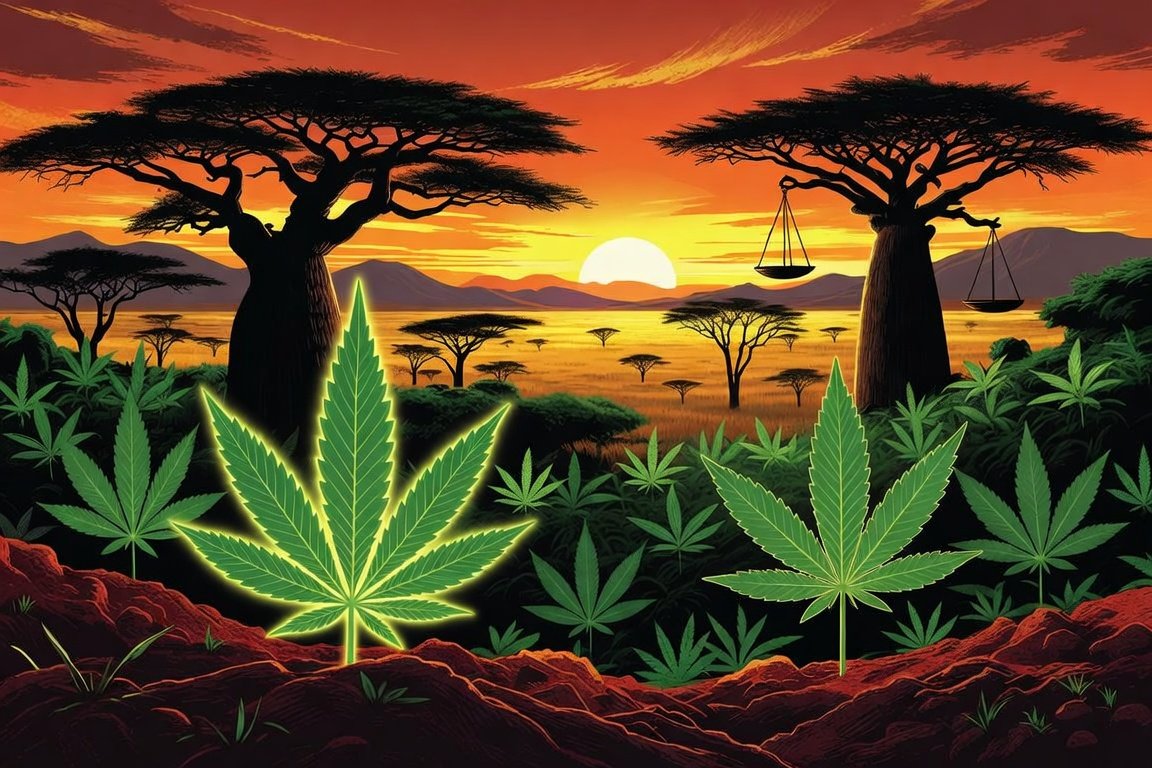
Africa at the Crossroads of Tradition, Law, and Global Demand
The African continent is undergoing a profound internal transformation, navigating the intersection of strict international obligations, massive economic prospects, and deeply rooted socio-cultural traditions. While global debates surrounding the liberalisation of cannabis legislation continue, key regional players are choosing a distinct, pragmatic path. Despite formal compliance with strict international agreements that mandate the criminalization of recreational use, several African nations are cautiously but confidently entering the global marketplace.
Crucially, this process is not driven by domestic grassroots demands for full legalization, but rather by external factors: rapidly growing global demand, the region’s unique agricultural potential, and the desire of governments to secure strategic positions in an emerging global industry. This involves creating tightly controlled, export-oriented corridors, developing medical cultivation, and expanding the industrial production of low-THC hemp.
The Treaty Framework: Strategy Within Prohibitionist Boundaries
The policy of African states is strictly bounded by the global legal regime. Countries across the continent are signatories to foundational international treaties – specifically the global conventions of 1961, 1971, and 1988 – as well as regional pacts under the African Union and the Southern African Development Community (SADC). These documents obligate participants to suppress the illicit production and trafficking of psychoactive substances.
Because directly violating these agreements risks diplomatic isolation and international sanctions, African reforms have taken the path of least resistance. Instead of enacting full decriminalization, governments are creating isolated legal enclaves focused exclusively on medical, scientific, and industrial purposes. This allows these countries to remain within the international legal field while extracting economic benefits from regulated medical programmes.
Southern Africa: The Continent’s Cannabis Powerhouse
The southern part of the continent has become the epicenter of agricultural and legal innovation, thanks to ideal climatic conditions, advanced agricultural expertise, and high investment attractiveness.
Lesotho emerged as the pioneer in this space in 2017, becoming the first African nation to legalize the cultivation of medical cannabis. Its economic model is built on strict commercial licensing, rigorous state audits, an export-oriented focus, and full alignment with international medical standards.
Zimbabwe adopted a similarly pragmatic approach in 2018, opening its sector to foreign investors with strictly regulated frameworks for establishing high-tech plantations – explicitly aimed at generating foreign currency reserves amid a prolonged domestic economic crisis.
South Africa occupies a unique position, featuring the most complex legal ecosystem on the continent. In 2018, the Constitutional Court delivered a landmark ruling, decriminalising the private use and cultivation of cannabis by adults based on constitutional rights to privacy and human dignity. This precedent closely mirrors the rights-based legal approaches seen in Latin America. However, due to the rigid constraints of international treaties, South Africa still prohibits a commercial adult-use market, restricting its legal industry to strictly licensed medical and industrial production.
Regional Variations: From Caution to Tradition
In East Africa, key players demonstrate extreme caution. Uganda authorised medical cannabis cultivation exclusively for export while maintaining a total ban and severe criminal penalties for the domestic market. In Kenya and Ethiopia, expert debates surround the potential of industrial hemp, yet lawmakers are slow to ease criminal restrictions due to domestic political risks and social stability concerns.
In West Africa, changes are incremental and targeted. In 2020, Ghana legalised industrial hemp with low psychoactive components, opening pathways for the textile and construction industries but leaving prohibition on medical and recreational use unchanged. In Nigeria, despite periodic parliamentary debates, some of the harshest punitive measures in the region remain firmly in place.
North Africa offers a unique example of transforming historical legacies. Morocco, traditionally one of the world’s largest suppliers of illicit cannabis resin, passed a law in 2021 to legalise medical and industrial use. The primary goal is to transition thousands of farmers from the shadow economy into a regulated legal framework, redirecting the region’s traditional resources toward modern pharmaceuticals under strict medical protocols. Neighbouring Algeria, Tunisia, and Egypt maintain a strict status quo, citing public morality and social stability.
The 2020 UN reclassification gave African governments crucial diplomatic cover, allowing them to expand medical programmes without appearing to breach international law. The continent’s natural advantages – year-round sun, low production costs, fertile land, and proximity to key markets – have already enabled African producers to export high-quality raw materials to Israel, Germany, and the United Kingdom.
A New Role in Global Geopolitics
The African model is unique because it does not attempt to dismantle the established global prohibitionist regime. On the contrary, by acting as a stabilising force, Africa reinforces the architecture of international treaties, counterbalancing the legal defiance seen in parts of Latin America.
The primary contradiction of this model lies within the domestic sphere: a paradoxical situation arises where countries cultivate high-tech products for the markets of Europe and North America, yet continue to criminally prosecute their own citizens for domestic possession. Nonetheless, by choosing a path of controlled, pragmatic evolution, Africa is proving that a region can become a key beneficiary of the global biopharmaceutical industry while fully respecting international law and maintaining internal balance.