The Compliance vs. The Defiance: How Asia and Latin America Fractured Global Drug Policy
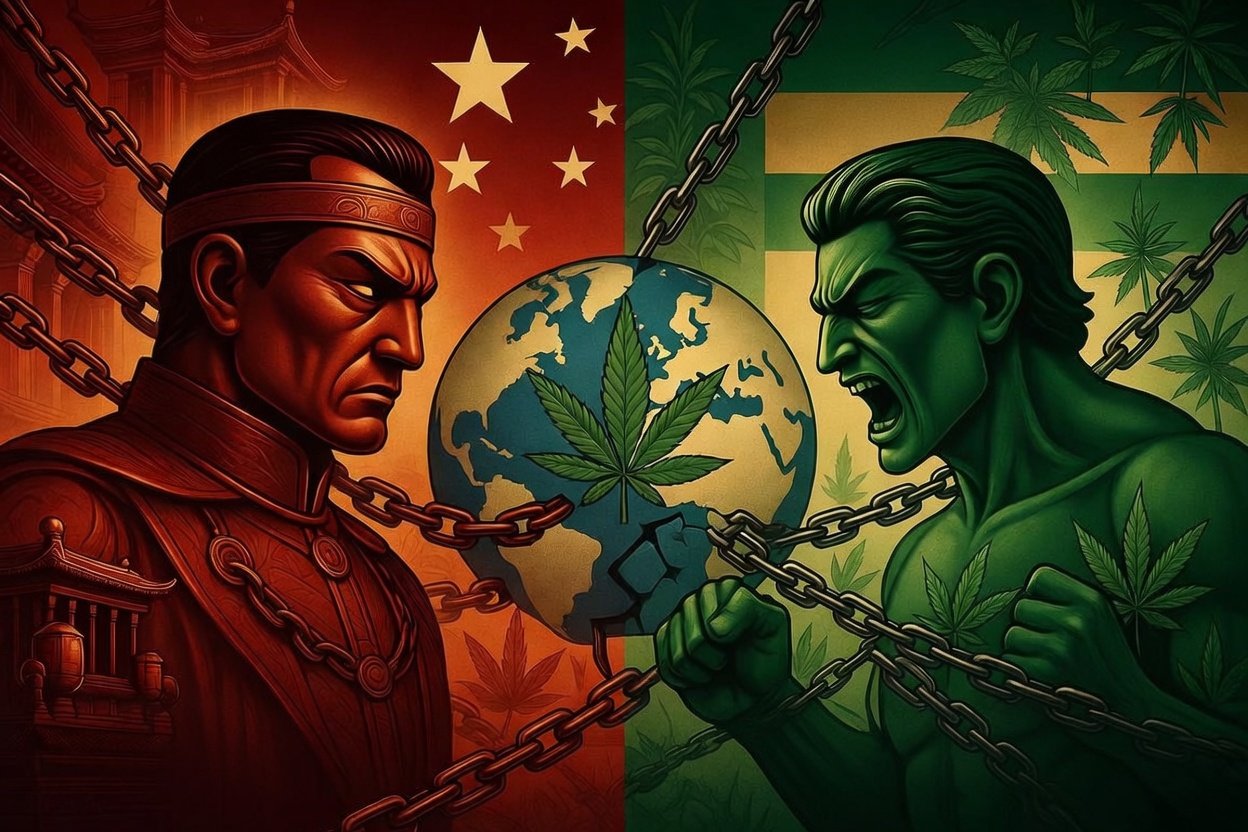
The Great Geopolitical Fracture
The global consensus on drug control has fractured along deep geopolitical and cultural fault lines. The era of a singular, globally enforced paradigm has been replaced by a dramatic ideological battle between two macro-regions. On one side stands Asia – bound by cultural conservatism and strict legal adherence. On the other stands Latin America – driven by grassroots activism and landmark judicial rulings. By analysing how these blocs navigate the core UN drug control treaties, we reveal a global landscape split between those who defend established order to protect social stability and those who weaponize domestic constitutional rights to force international evolution.
Legal Philosophy – Preservation vs. Reinterpretation
The core divide lies in how each region views the nature of international state obligations.
- Asia: International agreements are treated as absolute, binding pillars of national defence and regional security. The core UN drug control treaties are interpreted with a literalism that leaves zero room for adult-use deregulation. Compliance is reinforced by deep social norms that view drug control as essential for maintaining social harmony. Individual desires are systematically balanced against the collective well-being of the state.
- Latin America: The region has pioneered the art of using domestic constitutional law to legally neutralise international prohibitions. Latin American jurists argue that when international treaties demand punitive measures that infringe upon fundamental constitutional liberties – such as privacy and human dignity – the national constitution must triumph.
Models of Execution – Controlled Modernization vs. Sovereign Defiance
The practical implementation of cannabis policies reflects this deeper ideological divergence.
Asia’s Blueprint: “Controlled Modernization”
Asia’s reform is an incremental, heavily monitored process. Nations look exclusively for narrow, explicitly permitted pathways within global frameworks – specifically the clauses that restrict cannabis utilisation to strict “medical and scientific purposes.”
- Thailand: Decriminalised cannabis rapidly, but faced intense political friction, leading to subsequent state efforts to re-regulate the plant strictly for medical and health use.
- South Korea and Japan: South Korea became the first in East Asia to permit highly restricted medical imports. Japan updated its laws to allow cannabis-derived pharmaceuticals while simultaneously strengthening criminal penalties for non-medical possession.
- China and India: China remains a significant player in industrial hemp patents but maintains absolute zero-tolerance for recreational use. India balances traditional use under strict state-monitored exemptions while keeping commercial markets locked.
Latin America’s Blueprint: Breaking the Paradigm
Latin America creates entirely new legal paradigms, embracing direct diplomatic tension with global enforcement bodies.
- Uruguay: Fully regulated adult-use cannabis via a state-monitored system, openly prioritising domestic public health over outdated international consensus.
- Mexico and Colombia: Bypassed paralysed legislatures through judicial momentum. Mexico’s Supreme Court decriminalised personal use on constitutional grounds, while Colombia established a sophisticated medical export sector.
- Argentina and Brazil: Argentina authorised patient-led home cultivation under national registries. In conservative Brazil, the judiciary drives progress by routinely granting families the legal right to cultivate cannabis for medical necessity.
Geopolitical Consequences
The clash between Asia’s compliance and Latin America’s defiance has split global governance into two distinct camps.
- The Battle for the UN Narrative: While the narrow 2020 UN vote to reclassify cannabis provided diplomatic cover for Latin American medical expansion, Asian powers continue to use their geopolitical weight at the UN to defend the prohibitionist status quo.
- Political Cover for Conservatism: Asia’s unyielding legal stance acts as a stabilising force for the old order, offering vital political and diplomatic cover for conservative governments in Africa, the Middle East, and Eastern Europe wishing to resist international pressure to reform.
- Disrupted Global Supply Chains: Latin America is positioning itself for transnational agricultural trade. However, Asia’s strict border controls, zero-tolerance enforcement, and severe criminal penalties prevent cannabis from integrating into global supply chains. Asia has no intention of allowing foreign commercial imports to disrupt its markets, effectively dividing global trade into open Western-Atlantic networks and heavily fortified, prohibitionist Asian spheres.
A World Disunited
The future of drug policy will not be decided by a harmonious global consensus at the United Nations. It will be forged in the ongoing friction between the unyielding compliance of Asia – which proves regions can embrace medical technology while fiercely preserving traditional social fabrics – and the unstoppable defiance of Latin America, which has successfully rewritten the global narrative from the bottom up.