Cannabis in Pop Culture: Music, Film, Literature
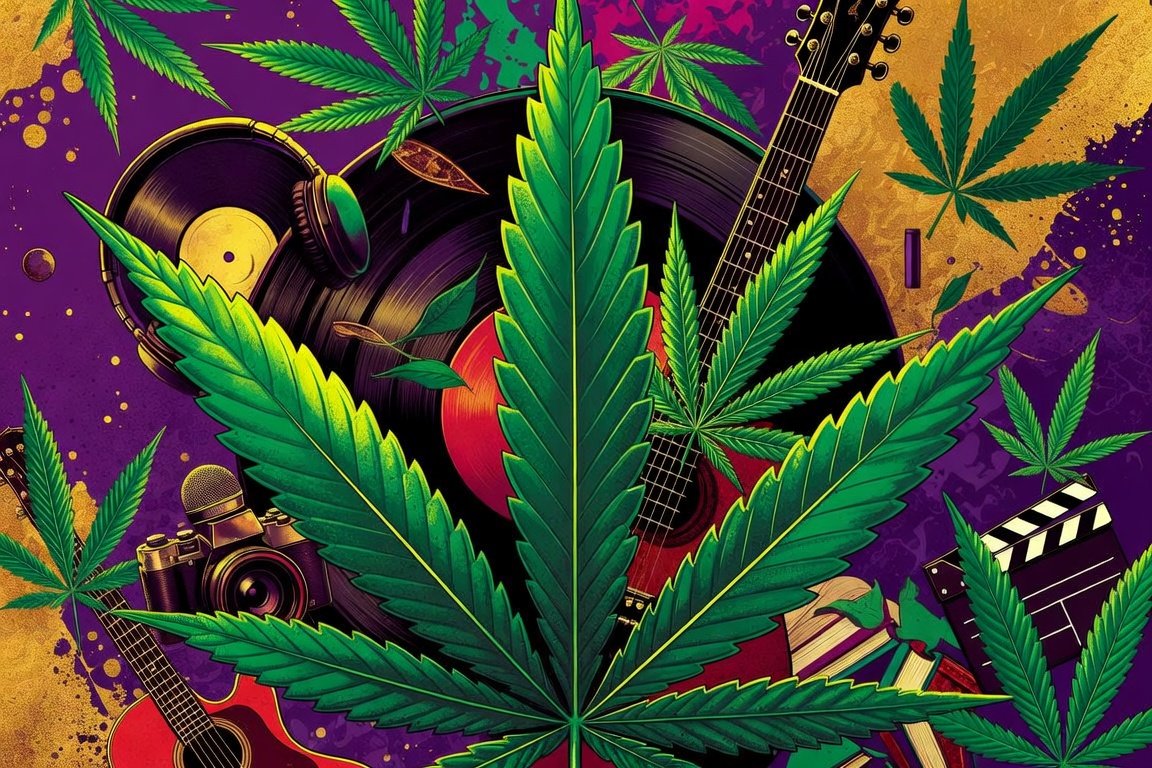
Cannabis has always lived a double life. In some eras it was a symbol of danger and deviance; in others, a source of creativity, rebellion, spirituality, or humor. Today, it appears in music videos, Netflix comedies, literary memoirs, and Grammy-winning albums. Pop culture hasn’t just reflected society’s shifting attitudes toward cannabis — it has actively shaped them.
This is the story of how a plant moved from taboo to icon, from the shadows of prohibition to the center of cultural expression.
Music: The First Cultural Home of Cannabis
Jazz: Where the Cultural Story Begins
If cannabis has a birthplace in modern culture, it’s the jazz clubs of 1920s and 1930s Harlem. Musicians like Louis Armstrong, Cab Calloway, and Billie Holiday didn’t just use cannabis — they joked about it, referenced it in songs, and treated it as part of the creative process. Armstrong called it “gage” and said it helped him “feel the music breathe.”
For jazz artists, cannabis symbolized improvisation, freedom, experimentation, and escape from rigid social norms. That’s precisely why authorities targeted jazz culture so aggressively: the plant wasn’t just intoxicating — it was culturally subversive.
Reggae: Cannabis as Spirituality and Resistance
In the 1960s and 1970s, cannabis found a new cultural home in Jamaica. Bob Marley, Peter Tosh, and Bunny Wailer transformed cannabis into a symbol of spiritual clarity, anti-colonial resistance, unity with nature, and Rastafarian identity. For them, cannabis wasn’t a drug — it was ganja, a sacrament.
Marley didn’t simply sing about cannabis; he reframed it as a tool for awakening, meditation, and liberation.
Hip-Hop: Cannabis as Identity, Lifestyle, and Industry
By the 1990s, cannabis became inseparable from hip-hop. Dr. Dre’s The Chronic, Snoop Dogg’s persona, and Cypress Hill’s anthems turned cannabis into a cultural language of independence, street wisdom, relaxation, and defiance.
Today, artists like Wiz Khalifa, A$AP Rocky, and countless others treat cannabis as part of their aesthetic, their business ventures, and their personal mythology. In hip-hop, cannabis is not a prop — it’s a brand, a lifestyle, a symbol of authenticity.
Film: From Demonization to Comedy to Normalization
Hollywood 1930–1950s: Cannabis as Horror
Early Hollywood portrayed cannabis as a moral catastrophe. Films like Reefer Madness (1936) depicted it as a cause of insanity, violence, and social collapse. These weren’t comedies — they were propaganda pieces designed to amplify fear.
Cannabis wasn’t a character; it was a monster.
1970–1990s: Counterculture Laughs Back
Then came Cheech & Chong. With Up in Smoke, Nice Dreams, and Still Smokin’, cannabis became a source of humor, camaraderie, and absurdity. The plant shifted from a symbol of danger to a symbol of laid-back rebellion.
The 1990s expanded this tone with Half Baked, Friday, and Dazed and Confused, where cannabis represented youthfulness, freedom, and a refusal to take life too seriously.
2000–2020s: Cannabis Becomes Ordinary
Modern film and television treat cannabis not as a plot device but as a normal part of life. Weeds explored suburban dealing with dark humor; Pineapple Express blended action with stoner comedy; Netflix series and Vice documentaries portray cannabis as a lifestyle, an industry, and a cultural norm.
Cannabis is no longer the story — it’s part of the setting.
Literature: Cannabis as Symbol, Tool, and Mirror
The Beat Generation: Cannabis as Mental Liberation
In the 1950s, writers like Jack Kerouac, Allen Ginsberg, and William Burroughs used cannabis as part of their creative rebellion. For them, it represented spontaneity, introspection, boundary-breaking, and the rejection of literary convention.
Cannabis became a metaphor for mental freedom.
Post-1960s: Cannabis as Countercultural Identity
From the 1970s through the 1990s, cannabis appeared in literature as a symbol of anti-establishment values, personal exploration, and alternative lifestyles. Writers like Hunter S. Thompson and Tom Robbins used cannabis to signal irreverence, humor, and philosophical playfulness.
Contemporary Literature: Cannabis as Everyday Reality
Today, cannabis in literature is neither exotic nor rebellious. It appears as a casual detail, a personality trait, a domestic habit, or a social marker. Modern authors use cannabis the way they use references to coffee or wine — as part of the texture of contemporary life.
Cannabis has moved from metaphor to mundane.
Conclusion: Cannabis as a Cultural Mirror
Cannabis in pop culture is not really about cannabis. It’s about the people who used it to express freedom, rebellion, spirituality, humor, creativity, identity, and resistance.
Each era projected its anxieties and aspirations onto the plant. Jazz made it a symbol of improvisation, reggae made it sacred, hip-hop made it iconic, film made it funny, literature made it introspective.
And today, as legalization spreads, cannabis is shifting again — from symbol to normalcy.
Pop culture didn’t just tell the story of cannabis. It helped society stop being afraid of it.