Cannabis and Spirituality: A Journey Into the Oldest Human Ritual
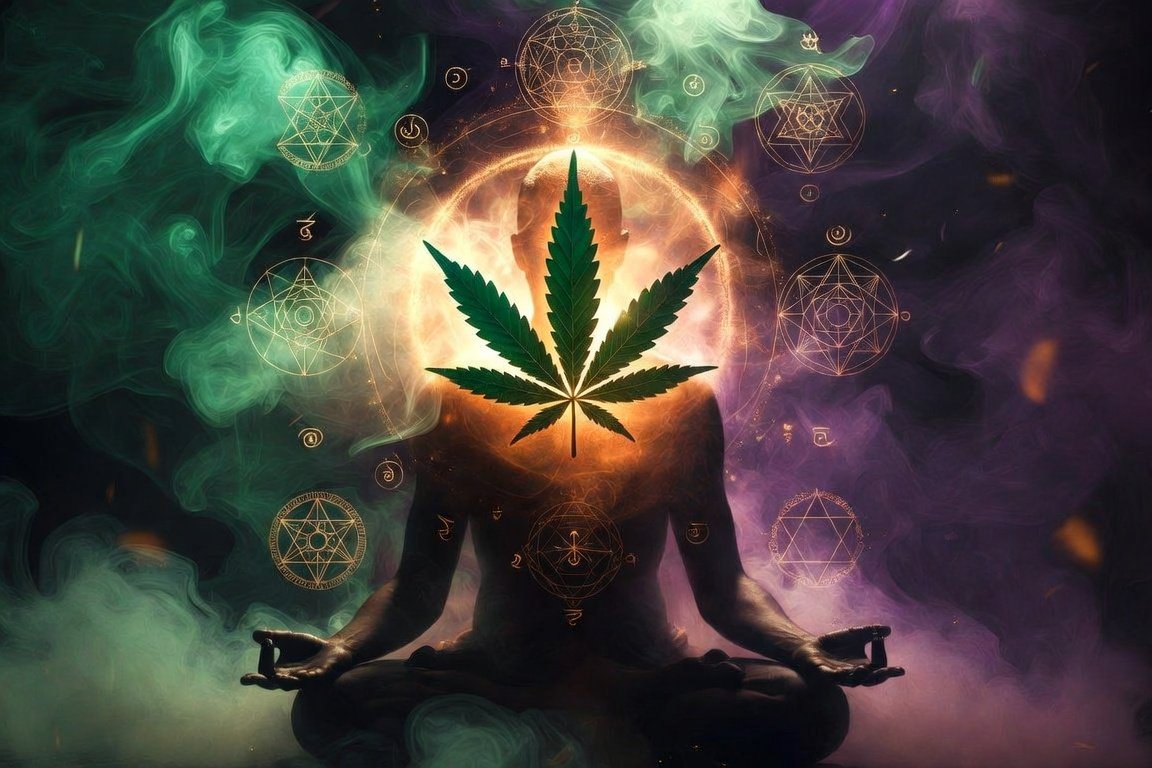
Long before cannabis became a political flashpoint, a medical debate, or a cultural symbol, it was something far more intimate — a doorway. A tool for reflection, a companion in ritual, a bridge between the inner world and the vast unknown. Across continents and centuries, people turned to cannabis not for escape but for meaning, connection, transcendence, and the quiet courage to face themselves.
To understand cannabis and spirituality is to step into humanity’s oldest conversation:
What does it mean to be awake inside your own life?
Ancient Roots: When Cannabis Was a Sacred Plant
Rituals Older Than History
Archaeologists have found cannabis in burial sites in China, Siberia, India, and the Middle East — not as contraband but as offerings. In ancient Central Asia, cannabis was burned in wooden braziers during funerary rites, filling tents with aromatic smoke meant to guide souls, comfort mourners, and open the mind to visions. These weren’t recreational moments; they were acts of reverence, grief, transition, and spiritual presence.
India: The Birthplace of Cannabis Mysticism
In India, cannabis appears in the Atharva Veda as one of the five sacred plants. Sadhus used it to deepen meditation, quiet the ego, soften the body, and dissolve the boundary between self and universe. Bhang — a drink made from cannabis leaves — became part of festivals, pilgrimages, and prayers. For many practitioners, cannabis wasn’t a substance but a teacher, a companion, a reminder that consciousness is larger than thought.
The Middle East and Africa: Cannabis as Communal Spirit
In Sufi circles, cannabis was sometimes used to enhance chanting, rhythm, breath, and ecstatic states. In parts of Africa, cannabis accompanied drumming, storytelling, healing ceremonies, and rites of passage. Everywhere it appeared, it carried the same intention: to shift perception, to open the heart, to connect the individual with something wider, deeper, older.
Culture and Spirit: How Cannabis Became a Modern Symbol of Inner Freedom
The Counterculture Rediscovery
In the 1960s, Western youth rediscovered cannabis not as rebellion but as revelation. For many, it became a tool for introspection, emotional honesty, sensory awareness, and philosophical curiosity. Cannabis accompanied conversations about meaning, identity, love, and the nature of reality. It softened the walls people built around themselves and made room for vulnerability, creativity, and connection.
Music as Spiritual Language
Jazz musicians used cannabis for flow, presence, improvisation, and emotional depth. Reggae artists framed it as meditation, unity, resistance, and divine communion. Psychedelic rock treated cannabis as a doorway to imagination, symbolism, and cosmic wonder. In each case, cannabis wasn’t the star — it was the tuning fork that helped artists find the frequency of their own truth.
Modern Seekers and the Quiet Revolution
Today, cannabis appears in yoga studios, mindfulness retreats, breathwork circles, and therapeutic settings. People use it for grounding, emotional release, trauma processing, and spiritual exploration. It helps some feel more embodied, more compassionate, more connected to nature, more aware of their inner landscape. It’s not a shortcut — it’s a catalyst.
Psychology of the Sacred: Why Cannabis Feels Spiritual
Softening the Ego’s Grip
Psychologists studying altered states note that cannabis can temporarily quiet the brain’s default mode network — the part responsible for self-criticism, rumination, and rigid identity. When that voice softens, people often feel more open, more curious, more connected, more present. This is why cannabis can make ordinary moments — a sunset, a melody, a conversation — feel profound.
Heightened Sensory Awareness
Cannabis amplifies color, sound, texture, emotion, and bodily sensation. This heightened perception can make meditation deeper, music richer, movement more fluid, and silence more meaningful. Spirituality often begins with paying attention — and cannabis helps people pay attention differently.
Emotional Access and Inner Honesty
For some, cannabis lowers emotional defenses, making it easier to face grief, joy, fear, longing, or love. Spirituality isn’t always peaceful; sometimes it’s raw, vulnerable, transformative. Cannabis can open the door to feelings people avoid — and in doing so, it can help them heal.
The Shadow Side: When Spirituality Becomes Escapism
Cannabis can illuminate, but it can also distract. The same qualities that make it spiritually meaningful — introspection, emotional intensity, altered perception — can become avoidance if used without intention. True spiritual practice requires integration, discipline, and honesty. Cannabis can open the door, but it cannot walk you through it.
The line between insight and escapism is thin. The difference is intention.
Conclusion: A Plant, a Mirror, a Moment of Truth
Cannabis has been many things across history — medicine, sacrament, outlaw, muse, companion. But at its core, it has always been a mirror. It reflects the state of the person who uses it, the culture that surrounds it, the questions that haunt us, and the truths we’re finally ready to face.
For some, cannabis is a spiritual tool. For others, it’s a moment of clarity. For many, it’s simply a way to feel more human.
Spirituality begins when we stop running from ourselves.
Cannabis, at its best, helps us pause long enough to listen.