Cannabis Stigma: How It’s Changing
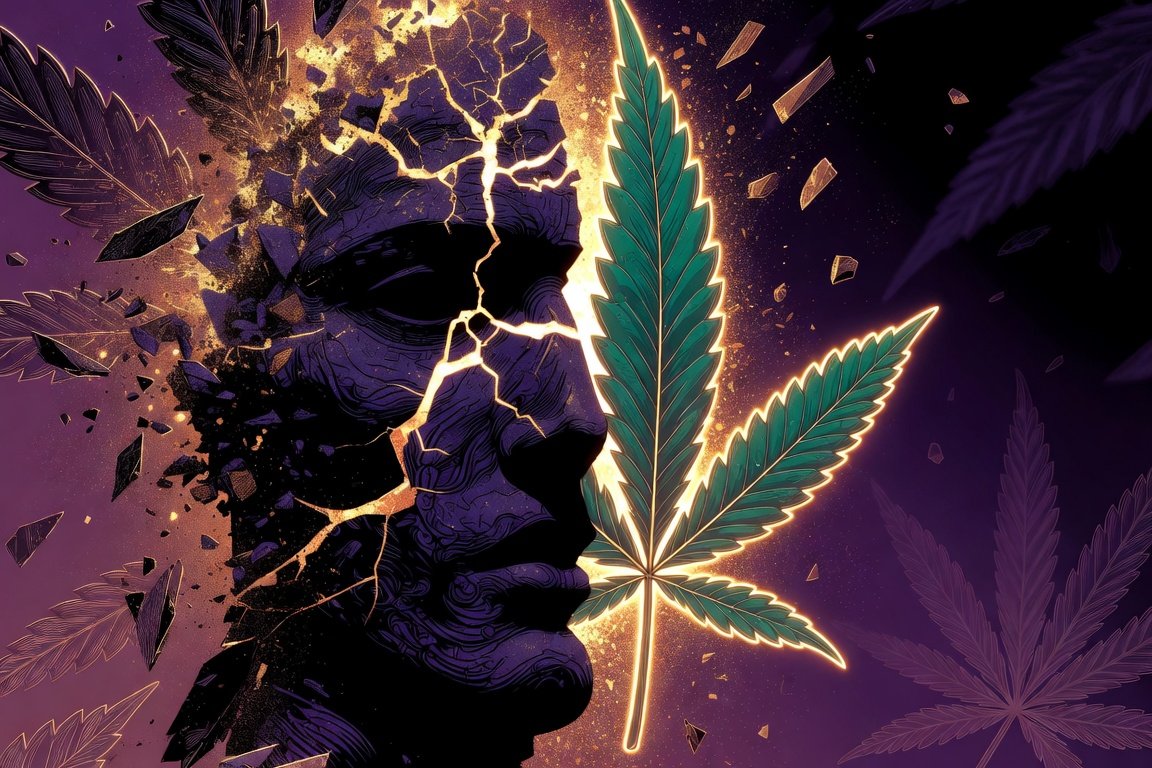
For most of the 20th century, cannabis wasn’t just illegal — it was unthinkable. A symbol of danger, deviance, and moral decay. Today, it’s sold in sleek boutiques, recommended by physicians, and discussed in parliament halls.
How did this transformation happen? Why did a plant once demonized as a societal threat become a normalized part of modern life?
The story of cannabis stigma is not just about a plant. It’s about politics, race, media, science, fear, and — finally — evidence.
The Birth of Stigma: Fear as Public Policy (1930s–1960s)
“Reefer Madness” and the Invention of a Villain
The modern stigma around cannabis didn’t grow naturally — it was engineered. In the 1930s, U.S. officials launched a coordinated campaign portraying cannabis as a drug that turned people violent, insane, and criminal. The infamous 1936 film Reefer Madness became the cultural blueprint for fear-based propaganda.
Newspapers amplified the panic with headlines like: “MARIJUANA: THE ASSASSIN OF YOUTH.”
These narratives weren’t based on science. They were based on politics — and, as historians like Martin A. Lee and Johann Hari show, on racial prejudice. Cannabis was associated with Mexican immigrants and Black jazz musicians, making it an easy target for moral panic.
Criminalization Becomes Identity
By the 1950s, cannabis wasn’t just illegal — it was a marker of deviance. To use cannabis was to be a delinquent, a dropout, a threat to society. Stigma wasn’t a side effect. It was the goal.
Counterculture and the First Cracks in the Wall (1960s–1980s)
Hippies, Vietnam, and the Generational Divide
The 1960s brought the first major shift. Cannabis became a symbol of rebellion, peace, and anti-war sentiment. But this didn’t erase stigma — it polarized it. To older generations, cannabis became a symbol of everything wrong with youth culture; to younger people, it became a symbol of freedom.
The War on Drugs: Stigma Weaponized
In the 1970s and 1980s, political rhetoric intensified. The “War on Drugs” reframed cannabis users as criminals, not patients or citizens. Mandatory minimums, mass incarceration, aggressive policing — all of this disproportionately targeted Black and Latino communities. Stigma became institutional.
The Medical Revolution: Science Challenges Fear (1990s–2010s)
California 1996: The Turning Point
When California legalized medical cannabis in 1996, it wasn’t just a policy shift — it was a cultural earthquake. For the first time, cannabis wasn’t framed as a threat, but as a medicine. Patients with cancer, HIV/AIDS, epilepsy, and chronic pain began sharing their stories. Doctors questioned old assumptions, researchers published data, families fought for access.
Dr. Sanjay Gupta and the Mainstreaming of Empathy
In 2013, CNN’s Dr. Sanjay Gupta released the documentary Weed, publicly apologizing for previously opposing medical cannabis. Millions of viewers saw children with epilepsy helped by CBD, patients with chronic pain finding relief, families fighting for legal access.
Stigma cracked — visibly, emotionally, nationally.
Science Replaces Mythology
Peer-reviewed studies in Lancet Psychiatry, JAMA, and NEJM dismantled decades of misinformation: cannabis is not a “gateway drug,” addiction risk is real but lower than alcohol or nicotine, medical benefits exist for specific conditions, and criminalization causes more harm than the plant itself.
Evidence began to win.
Legalization and the New Normal (2010s–2020s)
Canada, Uruguay, Germany: National Models Reshape Perception
When entire countries legalized cannabis, stigma didn’t just decline — it collapsed. Legalization reframed cannabis as a regulated product, a public health issue, and an economic opportunity. Surveys show that after legalization, fear decreases, curiosity increases, and stigma drops sharply among older adults.
The Rise of the Cannabis Consumer
Dispensaries began to look like Apple Stores. Products became sophisticated: microdosed edibles, CBD oils, low-THC beverages. The “stoner” stereotype gave way to professionals, parents, seniors, veterans, and athletes.
Cannabis became… normal.
The Stigma That Remains (2020s–Today)
Generational divides persist — older adults raised on “Reefer Madness” still carry the strongest stigma; younger generations see cannabis as less harmful than alcohol.
Workplace stigma — even in legal states, employees fear drug tests, HR consequences, and professional judgment.
Medical stigma — some doctors remain skeptical, citing lack of long-term data; patients often hide cannabis use from healthcare providers.
Racial stigma — despite legalization, arrest disparities persist — a reminder that stigma is not just cultural, but structural.
The Future: From Stigma to Literacy
Cannabis is moving from taboo to topic — from fear to literacy. The next stage isn’t normalization. It’s education.
A society that understands THC vs CBD, harm reduction, medical evidence, risks and benefits, and responsible use is a society that replaces stigma with knowledge.
Stigma Fades When Evidence Speaks
Cannabis stigma didn’t disappear overnight. It eroded — slowly, unevenly, but unmistakably — under the weight of science, stories, and lived experience.
Stigma thrives in silence. Understanding grows in the open. And cannabis is finally being discussed in the light.