THC vs CBD: Two Molecules, Two Very Different Stories
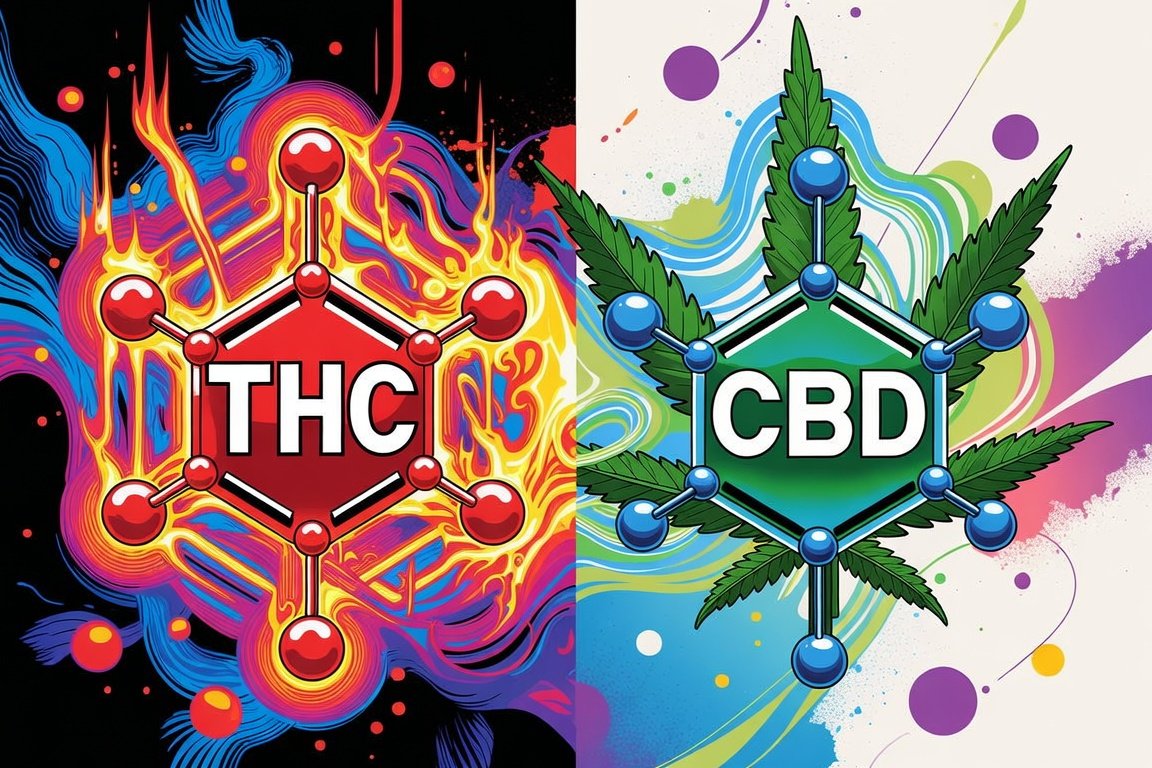
Cannabis is often talked about as if it were one thing — one plant, one effect, one experience. But the truth is far more interesting. Cannabis is a chemical universe, and two of its most important molecules — THC (Δ9-tetrahydrocannabinol) and CBD (cannabidiol) — behave like opposites in many ways. One is intoxicating, the other is not. One can trigger anxiety, the other can reduce it. One affects memory and coordination, the other may protect the brain.
Understanding the difference between THC and CBD is essential for anyone who uses cannabis — whether for relaxation, sleep, pain, creativity, or curiosity. This article does not offer medical advice. Instead, it explains — in clear, accessible language — what science actually says about THC and CBD, and why knowing the difference can dramatically change your experience.
We draw on respected sources including Nature, JAMA, the British Journal of Clinical Pharmacology, the WHO CBD Report, NIDA, and Harvard Health.
THC: The Molecule That Gets You High
THC (Δ9-tetrahydrocannabinol) is the primary psychoactive compound in cannabis. It binds strongly to CB1 receptors in the brain — the same receptors involved in memory, coordination, reward, fear, and time perception.
What THC Does
According to NIDA and Nature, THC can:
- create euphoria
- alter sensory perception
- increase appetite
- reduce pain
- impair short-term memory
- slow reaction time
- increase heart rate
These effects explain both the appeal and the risks of THC.
Why THC Can Trigger Anxiety
THC has a biphasic effect:
- Low doses may reduce anxiety.
- High doses often increase it.
This is one reason modern high-THC products — vapes, concentrates, dabs — can overwhelm people.
CBD: The Molecule That Calms Without Intoxication
CBD (cannabidiol) is non-intoxicating. It does not bind strongly to CB1 receptors. Instead, it interacts with serotonin receptors, inflammation pathways, and the endocannabinoid system indirectly.
What CBD Does
According to the WHO CBD Report and Harvard Health, CBD may:
- reduce anxiety
- decrease inflammation
- ease certain types of pain
- reduce seizures in specific conditions
- counteract some effects of THC
CBD does not impair memory, coordination, or reaction time.
Why CBD Doesn’t Make You High
CBD does not activate the brain’s reward pathways the way THC does. This is why CBD doesn’t cause euphoria, doesn’t create cravings, and has no known potential for addiction.
THC and CBD Together: The Entourage Effect
One of the most fascinating findings in cannabis science is that THC and CBD can modulate each other.
CBD Can Reduce THC’s Side Effects
Studies in JAMA and the British Journal of Clinical Pharmacology show that CBD can:
- reduce THC-induced anxiety
- soften paranoia
- stabilize mood
- reduce memory impairment
This is why traditional cannabis strains — before modern selective breeding — often contained balanced THC and CBD.
Modern Cannabis Has Lost This Balance
Most contemporary strains contain 20–30% THC and almost no CBD. This shift is one reason negative reactions (panic, paranoia, racing heart) have become more common.
How THC and CBD Affect the Body Differently
Brain and Cognition
THC impairs short-term memory, slows reaction time, and affects coordination.
CBD may protect neurons, does not impair cognition, and may reduce inflammation in the brain.
Anxiety and Mood
THC: low doses may relax; high doses may trigger anxiety.
CBD: consistently reduces anxiety in many studies.
Sleep
THC helps you fall asleep faster but disrupts REM sleep long-term.
CBD reduces pre-sleep anxiety and may stabilize sleep cycles.
Heart and Lungs
THC increases heart rate, raises blood pressure temporarily, and can stress the cardiovascular system.
CBD does not increase heart rate and may reduce inflammation.
Why Your Experience Depends on the Ratio
The THC:CBD ratio is one of the most important — and most overlooked — aspects of cannabis.
High THC, Low CBD — strongest high, highest risk of anxiety, most impairment.
Balanced THC:CBD (1:1) — gentler high, fewer side effects, more predictable experience.
High CBD, Low THC — no intoxication, calming, good for anxiety-prone individuals.
The Problem With Real-World Products
CBD Products Often Contain Little CBD
Studies in JAMA found that 70% of CBD products are mislabeled: some contain far less CBD than advertised, some contain unexpected THC, and some contain contaminants.
THC Products Are Often Stronger Than Expected
Modern vapes and concentrates can reach 70–90% THC — far beyond traditional cannabis. This makes dosing harder and reactions more unpredictable.
Conclusion: Two Molecules, Two Paths — Choose With Awareness
THC and CBD are not rivals. They are partners — two molecules that shape the cannabis experience in profoundly different ways.
One can elevate or overwhelm. The other can calm or clarify. Together, they can balance each other. Apart, they can create very different journeys.
If there’s one message to carry with you, let it be this:
Cannabis is not one substance — it’s a spectrum. The more you understand THC and CBD, the more control you have over your experience, your safety, and your well-being.
Glossary
THC (Δ9-tetrahydrocannabinol) — The primary psychoactive compound in cannabis. Produces euphoria, alters perception, increases appetite, and can cause anxiety or rapid heartbeat at high doses. Binds strongly to CB1 receptors in the brain.
CBD (Cannabidiol) — A non-intoxicating cannabinoid that does not cause a “high.” Can reduce anxiety, inflammation, and certain types of pain, and may soften some effects of THC. Interacts with serotonin receptors and modulates the endocannabinoid system without strongly binding to CB1 receptors.