Cannabis & Sleep: Does It Help or Hurt?
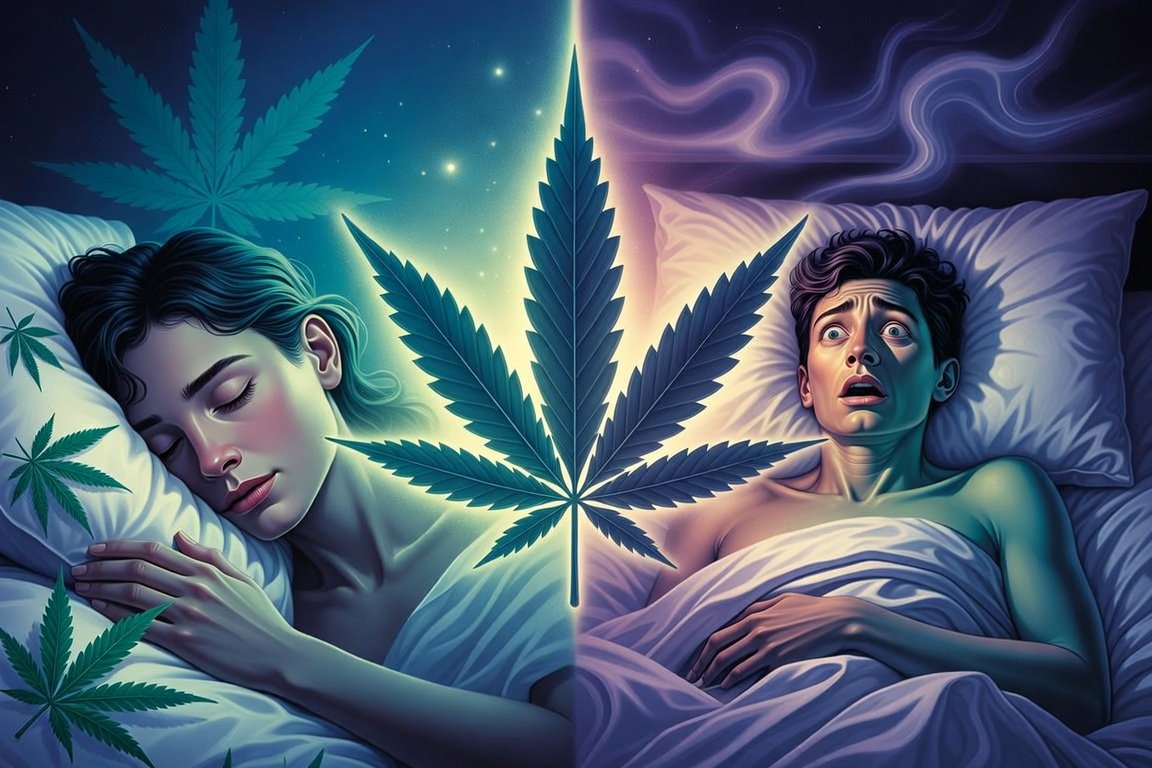
Cannabis and sleep have a long, tangled history. For some, cannabis feels like the perfect nightcap – a way to quiet the mind, relax the body, and drift off more easily. For others, it disrupts sleep, causes grogginess, or leads to dependence on cannabis as a nightly sedative.
So which is it? Does cannabis help sleep, or does it hurt it?
This article does not offer medical advice. Instead, it explains – in clear, accessible language – what science actually says about cannabis and sleep, and why the truth is far more complex than “good” or “bad.” We draw on respected sources including Sleep Medicine Reviews, the Journal of Clinical Sleep Medicine, Harvard Medical School, NIDA, and Lancet Psychiatry.
Why People Use Cannabis for Sleep
Millions of adults use cannabis to fall asleep faster. And they’re not imagining it: research shows that THC can reduce sleep latency – the time it takes to fall asleep. Studies in Sleep Medicine Reviews and Harvard Health note that cannabis can:
- relax muscles
- reduce pre-sleep rumination
- ease chronic pain
- lower stress
For people who struggle with racing thoughts or physical discomfort, this can feel like a lifesaver.
But the story doesn’t end there.
The Short-Term vs Long-Term Divide
Short-Term: Easier to Fall Asleep
In the short term, THC often helps people fall asleep more quickly. This is why many report cannabis as “the only thing that works.”
Long-Term: Sleep Quality Declines
Over time, however, the picture changes. According to Sleep Medicine Reviews and NIDA, long-term cannabis use can:
- reduce REM sleep
- fragment sleep cycles
- increase nighttime awakenings
- lead to tolerance and dependence
This means that while cannabis may help you fall asleep, it may not help you sleep well.
REM Sleep: The Hidden Cost
REM sleep is essential for memory consolidation, emotional processing, creativity, and learning. THC suppresses REM sleep – a finding consistently reported in the Journal of Clinical Sleep Medicine.
What this means in practice: people who use cannabis nightly may dream less, wake up less refreshed, experience emotional “flatness,” and come to rely on cannabis to feel sleepy.
And when they stop? They often experience REM rebound – intense dreams, vivid nightmares, and restless sleep.
CBD and Sleep: A Different Story
CBD interacts with sleep very differently from THC. Studies in Lancet Psychiatry and Harvard Health show that CBD may:
- reduce anxiety before sleep
- improve sleep in people with chronic pain
- stabilize sleep cycles
CBD does not suppress REM sleep the way THC does.
The catch: most commercial products labeled “CBD” contain too little CBD, unexpected THC, or inconsistent dosing — making real-world results unpredictable.
Edibles vs Smoking: Why the Form Matters
Smoking or vaping – fast onset, shorter duration, easier to control dose.
Edibles – slow onset (30–120 minutes), long duration (6–10 hours), higher risk of overconsumption. Edibles are more likely to cause next-day grogginess, disrupted sleep cycles, and anxiety if the dose is too high.
Cannabis Withdrawal and “Rebound Insomnia”
One of the most important – and least discussed – aspects of cannabis and sleep is withdrawal.
According to NIDA and Harvard Medical School, stopping daily cannabis use can cause:
- difficulty falling asleep
- vivid dreams or nightmares
- restless sleep
- irritability
- increased anxiety
These symptoms can last several days to several weeks, depending on the person.
Many people interpret withdrawal insomnia as proof that they “need” cannabis to sleep. In reality, it’s the brain recalibrating after long-term THC exposure.
When Cannabis Helps Sleep
Cannabis may be helpful for:
- short-term insomnia
- sleep disrupted by pain
- anxiety-driven sleeplessness
- occasional use after stressful days
CBD-dominant products may be especially useful for pre-sleep anxiety.
When Cannabis Hurts Sleep
Cannabis may worsen sleep when:
- used daily
- used in high-THC forms
- used in edible form too close to bedtime
- used by people with anxiety disorders
- used as the only sleep strategy
Chronic use can create a cycle: cannabis → sleep → tolerance → worse sleep → more cannabis.
Harm Reduction for Sleep: Practical Principles
- Use cannabis occasionally, not nightly – this prevents tolerance and protects REM sleep.
- Prefer CBD-dominant or balanced products – THC:CBD 1:1 is gentler on sleep architecture.
- Avoid high-THC concentrates – they disrupt sleep the most.
- Avoid edibles late at night – they last too long and can cause next-day grogginess.
- Don’t mix cannabis with alcohol – this worsens sleep quality and increases awakenings.
- Build non-cannabis sleep habits – light, temperature, screens, routine all matter more than people think.
Conclusion: Sleep Is a Conversation Between You and Your Body
Cannabis can help sleep – and it can hurt it. The difference lies in dose, frequency, chemistry, and intention.
If there’s one message to take with you, let it be this:
Cannabis can open the door to sleep, but it cannot carry you through the night. Only your habits, your rhythms, and your relationship with rest can do that.