The Invisible Arena: Navigating the Endocannabinoid Frontier of Athletic Anxiety
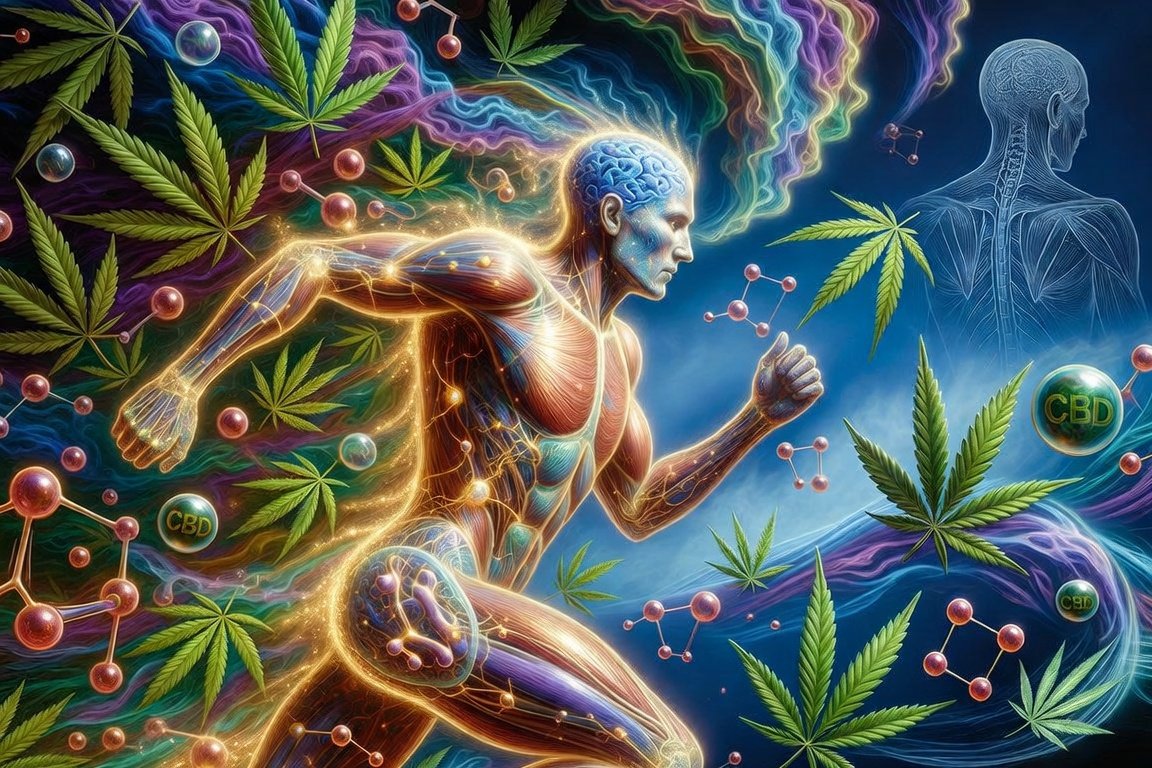
While physical recovery often takes centre stage, elite competitors face equally demanding mental challenges once the competition concludes. When the roar of the crowd fades, the elite athlete often faces an invisible opponent: a nervous system locked in a high-arousal state of “fight or flight.” The traditional reliance on sedatives to combat mental fatigue is giving way to a smarter approach – using non-intoxicating hemp extracts to regulate stress metrics without causing cognitive delays.
The Biological Pivot: From Opioid Fog to Homeostatic Harmony
The Midnight Synapse and the Anandamide Ghost
Neurological science has dismantled the idea that endorphins drive post-exercise recovery, noting their inability to pass the blood-brain barrier. The actual driver is anandamide – a highly adaptable lipid that easily enters the central nervous system to reduce anxiety and stress. This discovery has repositioned the endocannabinoid system (ECS) as the master conductor of homeostasis, responsible for regulating food intake, energy balance, immune response, and the perception of stress. By targeting these pathways, athletes are discovering they can manage anxiety not by dulling their senses, but by supporting the very system evolution designed to keep cursorial mammals in motion.
The Molecular Shield of the Serotonin Gateway
With official declarations confirming its safety, CBD has cemented its place in high-performance cognitive care. On a cellular level, CBD acts as a “negative allosteric modulator” that inhibits the enzyme fatty acid amide hydrolase (FAAH), which in turn boosts the body’s natural levels of healing anandamide. Crucially for mental wellness, CBD serves as an agonist at the 5-HT1A serotonin receptor – a key pathway for emotional regulation. This precise pathway calms the nervous system without impairing reaction speeds or causing the performance drops associated with THC.
The Clinical Ledger: Measuring the Weight of a Quiet Mind
The Podium Panic and the Nonlinear Response Curve
The transition of CBD into the athletic kit has been fuelled by rigorous data published in the Journal of Psychopharmacology and The Permanente Journal. A classic study by Crippa utilised a simulated public speaking test (SPST) to model high-pressure performance and found that a single dose of CBD significantly reduced subjective anxiety, cognitive discomfort, and physiological indicators like heart rate and blood pressure. Crucially, clinical mapping of these anti-anxiety effects demonstrates that CBD exhibits an inverted U-shaped dose-response curve, meaning its efficacy is highly dose-dependent and does not increase linearly with higher quantities; moderate dosages – specifically at a 300 mg threshold – demonstrate the highest relative performance in blunting subjective anxiety and managing acute stress responses compared to lower or significantly higher doses. This is reinforced by retrospective clinical audits showing that nearly four-fifths of participants tracked long-term drops in mental tension within a month of use. For an athlete, this translates to a “sweet spot” of calm that preserves the micro-second decision-making required for excellence while blunting the paralysing interference of pre-competition nerves.
The Nocturnal Scoreboard and the Adipose Reservoir
Rest is vital, but high baseline cortisol often disrupts an athlete’s sleep cycle. Tracked cohorts show that roughly two-thirds of users report enhanced rest metrics, which directly aids memory consolidation and physical repair. However, due to the lipophilic nature of the molecule, fat distribution dictates how long it remains in the body. Because female athletes typically have higher relative body fat, they face prolonged exposure times – making precise, individual dosing necessary to avoid accumulation.
The Institutional Thaw: When Professionalism Meets the Plant
The NBA’s Multi-Billion Dollar Bet on Balance
The regulatory shifts that began with WADA have culminated in major policy updates across the big leagues. The NBA’s updated collective bargaining agreements completely decoupled the compound from active performance penalties, treating it under the same frameworks as standard lifestyle choices like alcohol. This progressive change acknowledges that cannabis is not a performance-enhancing drug but a tool for personal wellness. Similarly, MLB’s insistence on independent purity stamps highlights a systemic shift toward integrating verified plant-based options into elite sport.
The Contamination Trap: The High Cost of Mislabelling
Even with policy progress, the reality of strict liability means zero tolerance for errors. Label inaccuracies in commercial markets mean that athletes risk ingesting undisclosed compounds. Under the current WADA code, the urinary threshold for THC remains at 150 ng/mL, but any detectable amount of other cannabinoids like THCA or CBG can result in an anti-doping violation. Furthermore, research in Frontiers in Sports and Active Living highlights that chronic THC use can cause an 80-100 ms delay in decision execution – a “performance cost” that can be the difference between a championship and an injury.
Conclusion
As we stand at the intersection of ancient botany and 21st-century bio-hacking, the quest for mental wellness has led us back to the earth. The “Green Mind” is not about sedation, but about the intelligent application of plant alchemy to achieve biological harmony in a world that never stops moving. While the science of cannabinoids in sport is still in its relative infancy, the current trajectory suggests that the future of recovery will be defined not just by how hard an athlete can train, but by how intelligently they can rest. In this quiet revolution, the answer to the mental load of modern athletics may finally be found in a dropper of pure, batch-tested extract – a botanical pivot helping the human spirit move with a little more grace and a lot less grind.