The Green Alchemy of the Gridiron: Decoding the Cannabinoid Revolution in Athletic Recovery
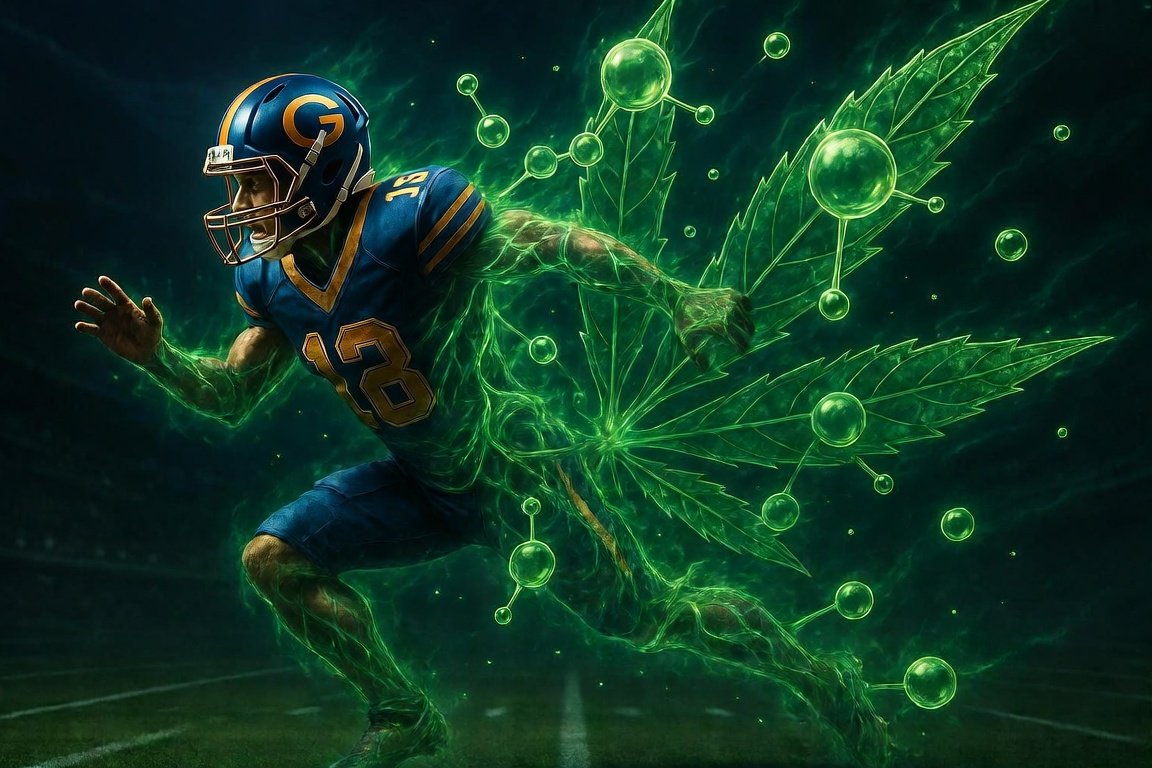
The post-game locker room was once a sanctuary of ice baths, ibuprofen, and the sharp, medicinal scent of wintergreen. Today, that atmosphere is shifting toward something more organic, as elite athletes trade the “vitamin I” (ibuprofen) bottle for gold-tinted droppers of hemp extract. In the high-stakes theatre of modern sports, where the difference between a podium finish and a forgotten performance is measured in metabolic friction, a new protagonist has emerged: cannabidiol (CBD). This non-intoxicating molecule has transitioned from the fringes of “stoner culture” to a multibillion-dollar recovery industry, promising to extinguish the silent fires of inflammation without the psychic fog of its cousin, THC.
The Biological Symphony of Homeostasis and the ECS
The Silent Fire Within and the Endocannabinoid Awakening
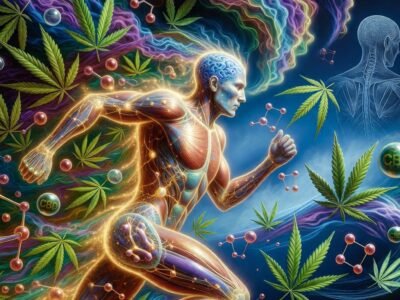
Every sprint, tackle, and heavy lift is an act of controlled destruction that triggers exercise-induced muscle damage (EIMD) and the inevitable, aching shadow of delayed onset muscle soreness (DOMS). Traditionally, we attributed the “runner’s high” to endorphins, but scientific paradigms have shifted toward the endocannabinoid system (ECS), a sophisticated homeostatic regulator that maintains balance in our immune and nervous systems. Modern research suggests that the euphoric calm following aerobic activity is actually driven by anandamide, a lipid that crosses the blood-brain barrier more effectively than larger opioid peptides. CBD enters this biological symphony not by hijacking receptors, but by acting as a “negative allosteric modulator” and inhibiting the enzyme FAAH, which effectively boosts the body’s own levels of these healing lipids.
The Molecular Mechanics of the Vanilloid Shield
Beyond simple pain masking, the science reveals a complex map of molecular targets. CBD interacts with the TRPV1 vanilloid receptors – the same pathways that respond to the heat of capsaicin – to desensitise pain signals and regulate the intracellular calcium levels required for muscle repair. Simultaneously, it targets the PPARy receptors to blunt the NF-kB pathway, essentially “turning off” the master switch for pro-inflammatory cytokines like IL-6 and TNF-alpha. The World Health Organization (WHO) has notably recognised pure CBD as safe and non-addictive, providing a crucial scientific foundation for its integration into the daily regimens of those who push the human machine to its absolute limit.
The Laboratory vs. The NSAID: A New Standard of Proof
From Rugby Trenches to Marathon Finish Lines
The anecdotal whispers of the past have been replaced by the rigorous data of the present. Recent systematic reviews and meta-analyses evaluating cannabinoid administration in sports science confirm that CBD exhibits significant anti-inflammatory, analgesic, and neuroprotective properties that directly alleviate symptoms of exercise-induced muscle damage (EIMD). Physiological shifts measured in contemporary controlled trials demonstrate that by modulating the inflammatory cascade, CBD assists in accelerating the recovery of muscle function and attenuating subjective perceptions of pain post-exertion. These aren’t just subjective feelings – they are measurable physiological shifts in the body’s ability to clear metabolic debris.
The Head-to-Head Clash with Ibuprofen
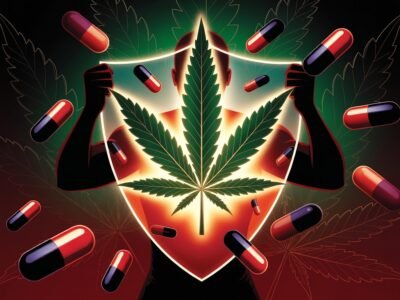
For decades, non-steroidal anti-inflammatory drugs (NSAIDs) were the unquestioned kings of the athletic kit, despite their well-documented risks to gastrointestinal health and kidney function. While traditional NSAIDs like ibuprofen non-selectively inhibit COX-1 and COX-2 enzymes – frequently leading to compromised mucosal integrity in the gut and potentially delaying long-term tissue adaptation – CBD operates through alternative metabolic pathways. Emerging comparative preclinical and clinical frameworks position the plant-based alternative as a potentially safer choice for athletes with sensitive digestive tracts, as pure CBD administration demonstrates no toxic burden on gastrointestinal tissues. However, a 2017 report in JAMA reminds us of the industry’s “wild west” roots, revealing that only 31% of online CBD products were accurately labelled, with many harbouring undisclosed THC that could end a career in a single drug test.
The Institutional Pivot and the Search for Pure Recovery
The Diamond, the Court, and the Corporate Endorsement
The cultural dam broke in 2018 when WADA removed CBD from its list of prohibited substances, but the real “paradigm shift” occurred when the major leagues stepped into the green. Major League Baseball (MLB) became the first to form an official CBD sponsorship with Charlotte’s Web in 2022, requiring the strict “NSF Certified for Sport” designation to ensure products are free from banned contaminants. The NBA followed suit in 2023, removing marijuana from its prohibited list entirely and allowing players to invest in and endorse CBD brands, a move mirrored by the NFL’s recent decision to fund clinical trials exploring CBD as a safe alternative to opioids. Icons like Joe Montana, Megan Rapinoe, and Mike Tyson have traded their jerseys for executive chairs, betting on a future where plant medicine is as common as a Gatorade shower.
The Strict Liability and Laboratory Realities
Despite the institutional embrace, the ghost of “strict liability” still haunts the podium. Anti-doping agencies and sports governing bodies globally enforce the absolute rule of strict liability, meaning an athlete is uniquely responsible for any substance found in their sample. Verified regulatory database entries tracking real-world athletic suspensions highlight the severe risks associated with contaminated over-the-counter CBD products. Even when labels claim a product is completely free of psychoactive compounds, untraceable industrial variations or mislabelled batches containing cross-contamination of THC can trigger an adverse analytical finding and result in severe career-ending bans. Athletes are now hyper-vigilant, demanding batch-specific Certificates of Analysis (COA) and opting for CBD isolates or broad-spectrum products that use ISO-accredited labs to prove the absence of THC. In this landscape, the “ND” (Not Detected) label is more valuable than any marketing slogan, as a single batch variation can be the difference between a gold medal and a lifetime disqualification.
Conclusion
As we stand at the intersection of ancient botany and 21st-century bio-hacking, the “Green Mind” is no longer a counter-culture philosophy but a competitive necessity. The ECS represents the ultimate biological frontier – a system we are only beginning to understand as the master conductor of recovery. While the science is still in its relative infancy, the current trajectory suggests that the future of the athletic body will be defined not just by how hard it can work, but by how intelligently it can rest. The “runner’s high” was just the beginning; the real goal is a sustained, anti-inflammatory state of grace that allows the human spirit to transcend its physical limits, one drop of green alchemy at a time.